

Injectable Peptides: Out of the Back Alley and Into the Light?
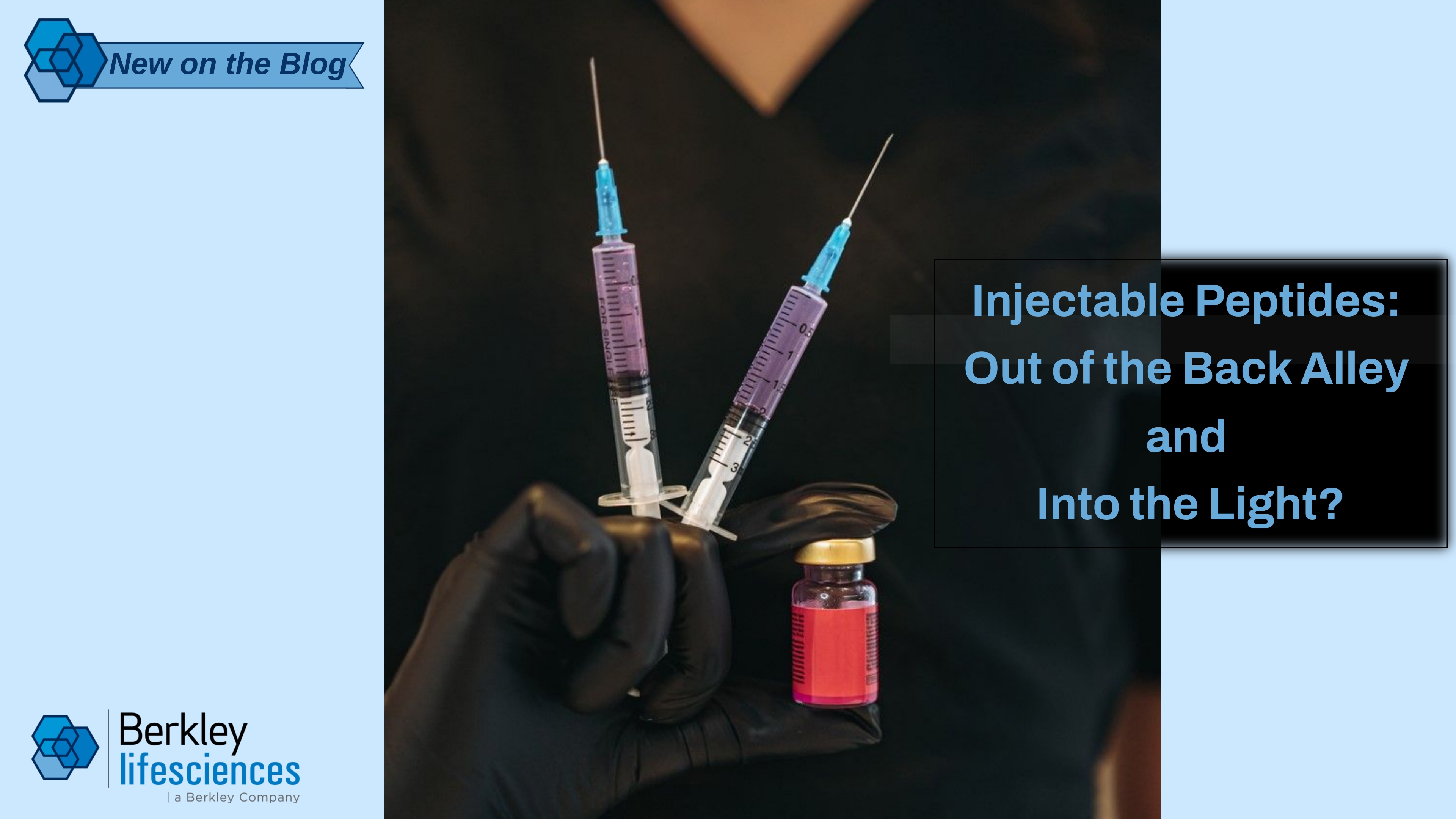
Spanish explorer Ponce de Leon’s “fountain of youth” is legendary. In St. Augustine, Florida, visitors still flock to a tourist attraction named for that mystical spring, hoping that a drink from the city’s natural waters might turn back their biological clocks.
At least the only consequence of indulging in the Ponce de Leon fantasy is a mouthful of sulfur‑smelling water. Today’s pursuit of the “fountain of youth” carries greater risk. Increasing numbers of consumers are injecting themselves with unapproved peptides based on unsubstantiated claims that these compounds bestow regenerative properties. Many of these products are purchased from online sellers operating outside traditional regulatory oversight, where they have not been tested for either efficacy or safety.
Two years ago, it would have been difficult to imagine consumers injecting themselves with unapproved drugs purchased online. Today, peptides are everywhere—from TikTok and other social‑media platforms to wellness influencer posts, medical spas, fitness clinics, and “longevity” programs. Common claims include faster recovery and muscle repair, anti‑aging effects, weight loss, and performance enhancement.
Approval by the U.S. Food and Drug Administration (FDA) of well‑studied GLP‑1 pharmaceuticals (1, 2, 3) has eased consumer concerns about peptides and normalized self‑administered injectables. That normalization has also fueled a growing gray market for injectable peptide products.
U.S. Department of Health and Human Services leadership has publicly questioned the FDA’s current approach to certain unapproved peptides and signaled interest in easing restrictions on their use, prompting renewed attention to FDA policy and advisory‑committee review.
What Are Peptides?
Peptides, sometimes known as microproteins, are short chains of fifty amino acids or fewer; longer chains are considered proteins. Peptides act as signaling molecules in the body, influencing a wide range of biological functions, including hormone regulation, immune response, tissue repair, and metabolic activity.
The human body produces peptides in the thousands, but they can also be synthesized in the laboratory and developed into safe and effective drugs. Insulin is a peptide that has been approved for decades to control diabetes. More recent examples include GLP‑1 (glucagon‑like peptide‑1) agonists such as semaglutide and tirzepatide, sold under brand names including Wegovy and Zepbound. These peptides stimulate insulin release and slow the passage of food through the gut. They have been approved by the FDA for diabetes treatment and weight management.
How Are Peptides Regulated?
Like other pharmaceuticals, peptides marketed to diagnose, prevent, or treat disease or physical conditions are regulated by the FDA as prescription drugs under the Federal Food, Drug, and Cosmetic Act (FDCA). They are not dietary supplements.
Some peptides, such as GLP‑1 drugs, have been approved by the FDA for specific uses after extensive study of their effectiveness and safety. As with all approved drugs, physicians may prescribe them for off‑label use.
Given the complexity and length of the drug‑approval process, how have unapproved peptides sold online become so prevalent? The answer begins with the FDA’s regulation of compounding pharmacies.
Compounding is the practice by which a licensed pharmacist, licensed physician, or an outsourcing facility combines, mixes, or alters drug ingredients to create a medication tailored to an individual patient. Section 503A of the FDCA allows compounding without FDA premarket approval or full compliance with labeling and current good manufacturing practices, provided specific conditions are met.
For bulk drug substances, compounders may use only ingredients that:
- are components of FDA‑approved drugs;
- have a United States Pharmacopeia (USP) monograph; or
- appear on the FDA’s bulk drug substances list.
That list reflects a policy‑based framework under which the FDA exercises enforcement discretion. Substances are placed into three categories. Category 1 includes substances the FDA has determined present sufficient safety data for compounding. Category 2 includes substances the FDA considers too risky for compounding and for which it intends to take enforcement action. Category 3 includes substances for which the agency lacks sufficient information to make a determination.
FDA Safety Concerns and Category 2 Peptides
In 2023, the FDA placed 19 peptides into Category 2, citing long‑standing research in peptide drug development demonstrating the risk of immune reactions. While immune responses can occur with peptide drugs generally, the FDA concluded that the limited human studies conducted on these particular peptides did not adequately address known safety concerns.
Peptides placed in Category 2 have included several popular compounds, such as BPC‑157, TB‑500, Ipamorelin, Melanotan II, CJC‑1295, and GHK‑Cu.
Despite the FDA’s stated safety concerns, online sellers—including some compounding pharmacies—continue to market and sell these peptides directly to consumers. Some label the products “for research use only” or “not for human use,” while marketing them in ways that suggest personal injection. The FDA has issued warning letters addressing this practice. Other sellers operate overseas, making regulatory oversight and enforcement more difficult.
Efficacy and Safety
Despite widespread anecdotal testimonials on social media, there is a paucity of clinical evidence supporting claims about the effectiveness of most unapproved injectable peptides, particularly those placed in Category 2[LW1] [PS2] . There is even less evidence regarding long‑term safety.
In explaining its decision to place certain peptides in Category 2, the FDA pointed to research highlighting the risk of immune reactions. These reactions can range from mild skin irritation to life‑threatening anaphylactic shock, which can impair breathing and motor function.
Another concern is the potential for increased cancer risk. Many peptides, including CJC‑1295, increase growth hormone secretion or stimulate tissue growth. Others, such as BPC‑157, promote new blood‑vessel formation, which may facilitate tumor growth. When consumers “stack” multiple peptides, long‑term toxic effects may occur. Such effects may take years to manifest.
These risks are not hypothetical. In 2025, two women attending a Las Vegas conference—the Revolution Against Aging and Death Festival—received peptide injections at a booth operated by health practitioners. Both became critically ill, experiencing elevated heart rates, tongue swelling, and difficulty breathing. One lost control of her neck muscles; the other required intubation and ventilatory support.
Little new scientific evidence has been published on the peptides placed in Category 2 since the FDA’s 2023 action. A recent review in the American Journal of Sports Medicine identified only one poorly designed human trial among the available literature. Some animal studies showed promise but never advanced to meaningful clinical investigation. Even industry advocates have acknowledged limited knowledge about the safety of individual peptides currently being sold.
Risks of Online and Injectable Products
Safety concerns are heightened for unapproved peptides marketed online, particularly by sellers outside the United States. These sellers are not licensed by any state and are not required to comply with accepted manufacturing standards. Risks include inconsistent production, inaccurate dosing, contamination, and impurities.
Injectable products pose particular danger because they bypass many of the body’s natural defenses. The FDA has increased enforcement activity against telehealth, compounding, and digital‑health companies selling unapproved injectable peptide products, emphasizing the risk of serious and life‑threatening harm if such products are contaminated or improperly manufactured. Health Canada has issued similar advisories.
A Sea Change in Regulatory Approach?
Some policymakers have characterized the FDA’s placement of certain peptides in Category 2 as regulatory overreach, arguing that restricting access through licensed compounders may push consumers toward unregulated overseas markets. They have suggested that reconsidering the classification of certain peptides could shift their sale back into more controlled channels. As a first step, the FDA is reconstituting its Pharmacy Compounding Advisory Committee. At a meeting scheduled for late July 2026, the committee is expected to discuss several Category 2 peptides, including BPC‑157. Additional meetings addressing other peptides are anticipated in 2027. Historically, the FDA has often followed advisory‑committee recommendations, though outcomes are not predetermined.
Balancing Risk, Evidence, and Choice
It is a laudable goal to bring unapproved peptides out of the “back alley and into the light,” given the current risks posed by gray‑market sales and aggressive marketing of unapproved drugs. Whether reclassifying certain peptides for compounding is the right solution remains an open question, particularly given the limited evidence regarding their safety and effectiveness.
Encouraging patient choice is also a laudable goal. But if consumers are making decisions in an information vacuum—guided primarily by online promotion rather than clinical evidence—it is worth asking whether that choice is truly informed. As a former FDA deputy commissioner has observed, meaningful patient choice requires a system that asks companies to show that their products do what they claim[LW3] .
For insurers, health‑care providers, and life‑sciences companies, the rapidly evolving peptide landscape presents not only scientific uncertainty, but also regulatory, liability, and enforcement risks that continue to shift as FDA policy develops. The search for the fountain of youth may be eternal, but the risks associated with unproven therapies are immediate.
Authored by Lisa Krist, Berkley Life Sciences, VP, Chief Customer Focus Officer